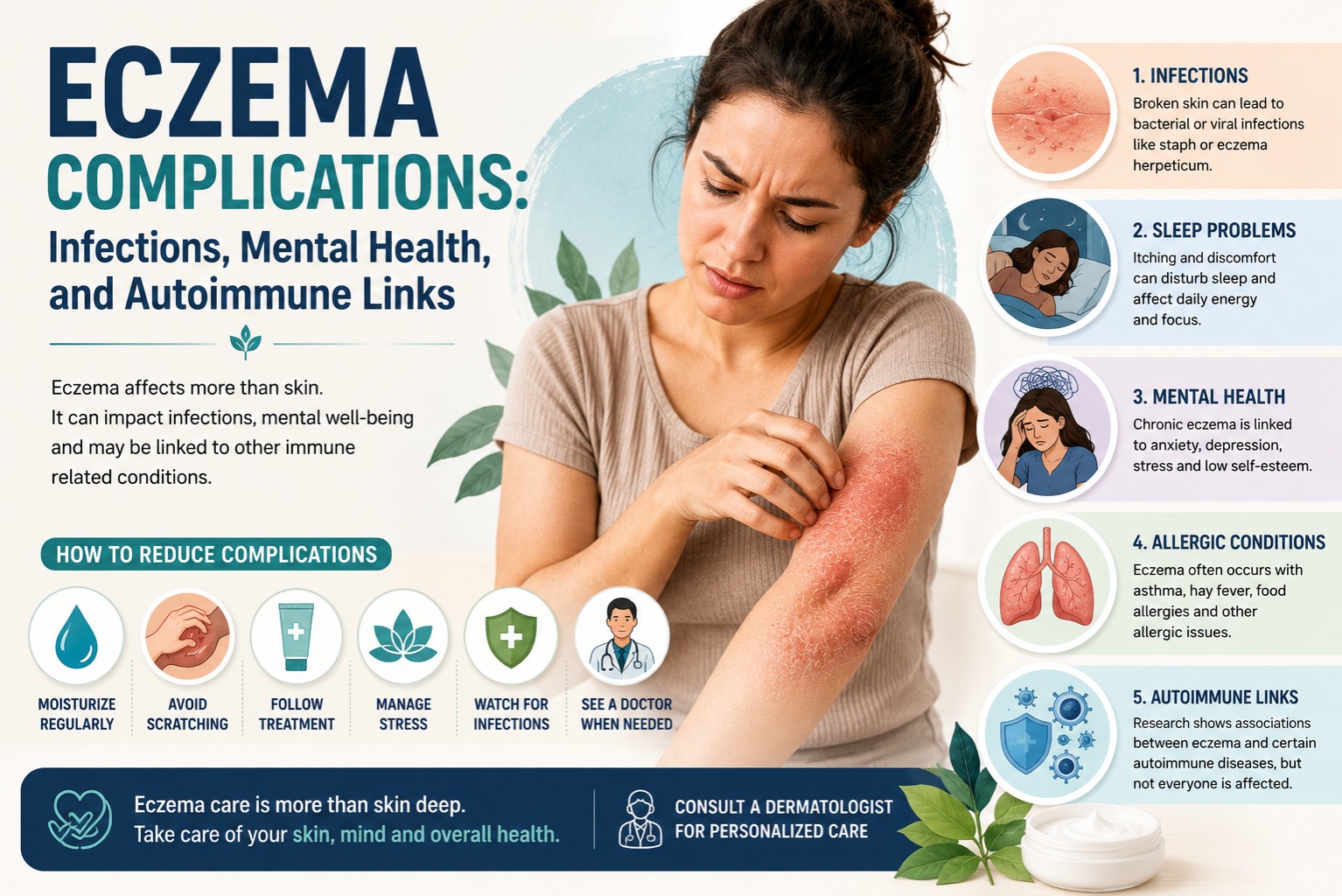
Eczema is more than just dry, itchy skin. For people with frequent or severe flare-ups, it can affect sleep, emotional well-being and overall quality of life. Damaged skin can also make infections more likely.
Understanding these complications can help you recognise when eczema needs additional medical attention.
1. Skin Infections
Eczema can weaken the skin barrier. Scratching can create small breaks in the skin, allowing bacteria and viruses to enter.
Signs of a possible infection include:
Increasing redness or swelling
Pain or warmth
Pus or yellow crusts
Rapidly worsening symptoms
Fever
A rare but serious complication is eczema herpeticum, a viral infection that can cause painful clusters of blisters and requires prompt medical attention.
2. Sleep Problems
Persistent itching can make it difficult to fall asleep or stay asleep. Poor sleep can then contribute to daytime tiredness, difficulty concentrating and irritability.
Controlling eczema and keeping the skin moisturised can help reduce nighttime discomfort.
3. Mental Health
Living with visible skin changes and constant itching can be emotionally exhausting. People with eczema may experience anxiety, low mood, embarrassment or reduced confidence.
If eczema is affecting your social life, work, sleep or mood, don't hesitate to discuss it with a healthcare professional. Mental well-being is an important part of eczema care.
4. Allergic Conditions
Atopic dermatitis can occur alongside other allergic conditions such as:
Asthma
Allergic rhinitis
Food allergies
Having eczema doesn't mean you will develop these conditions, but people with a history of allergies may experience more than one of them.
5. Eczema and Autoimmune Diseases
Atopic dermatitis is not generally considered a classic autoimmune disease. However, research has found associations between eczema and certain autoimmune conditions, including thyroid disorders, vitiligo, alopecia areata and some inflammatory diseases.
An association does not mean that eczema causes these conditions. Most people with eczema will not automatically develop an autoimmune disease.
How Can Complications Be Reduced?
Good eczema management can help protect the skin and reduce flare-ups.
Moisturise regularly
Avoid excessive scratching
Use prescribed treatments correctly
Avoid personal triggers where possible
Keep nails short
Seek treatment if the skin appears infected
Pay attention to changes in sleep or mood
When Should You See a Doctor?
Seek medical advice if eczema suddenly becomes much worse or you notice pain, swelling, pus, rapidly spreading redness, fever or painful blisters.
You should also speak with a healthcare professional if eczema is regularly affecting your sleep, work, relationships or emotional well-being.
The Bottom Line
Eczema can affect much more than the skin. Infections, sleep disruption and mental-health challenges are important complications to watch for, while research continues to explore its relationship with other immune-related conditions.
With appropriate treatment and regular skin care, many people can keep eczema under control and reduce its impact on daily life.
Medical disclaimer: This article is for general health education and does not replace professional medical advice, diagnosis or treatment. Consult a qualified healthcare professional for persistent, severe or worsening eczema.