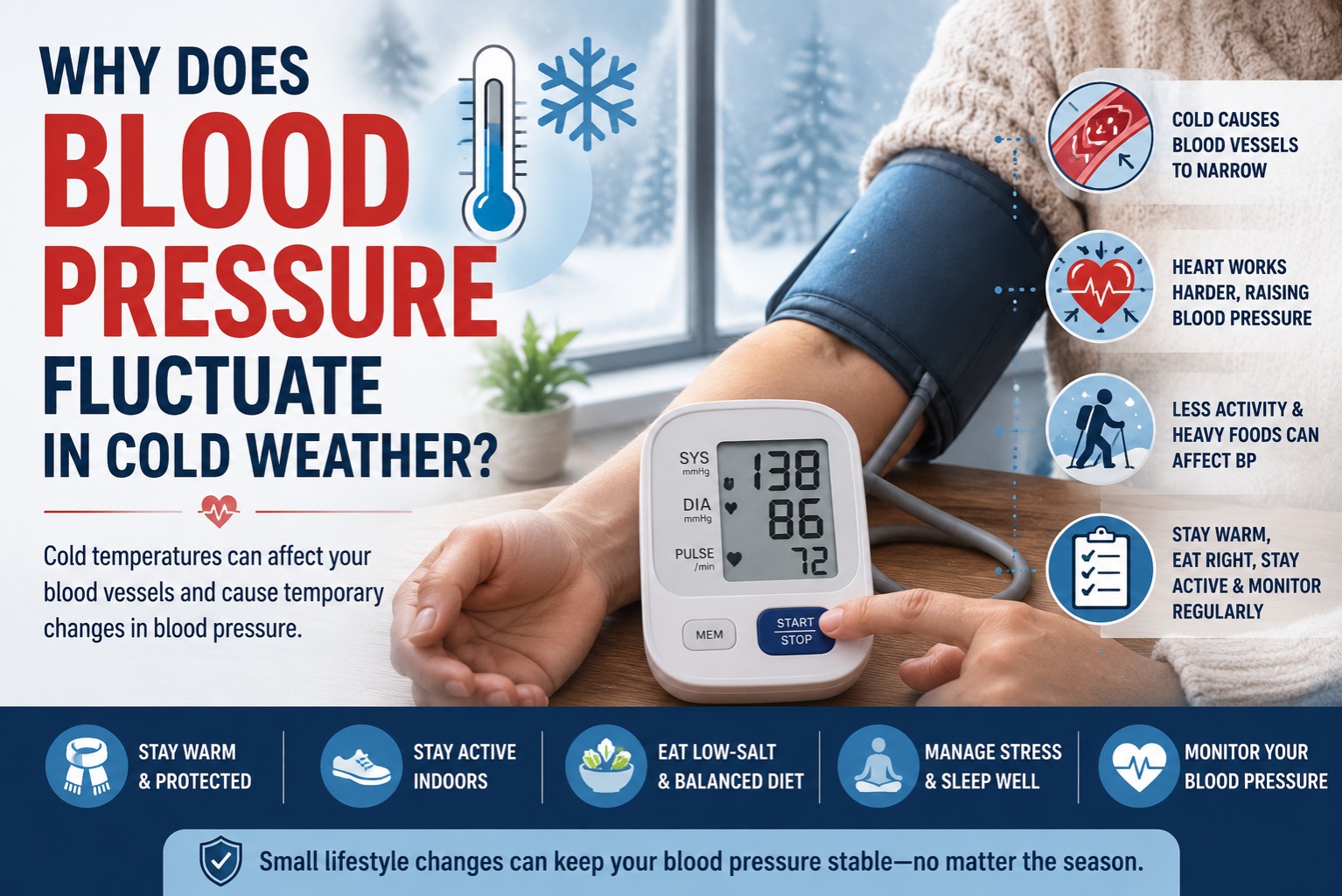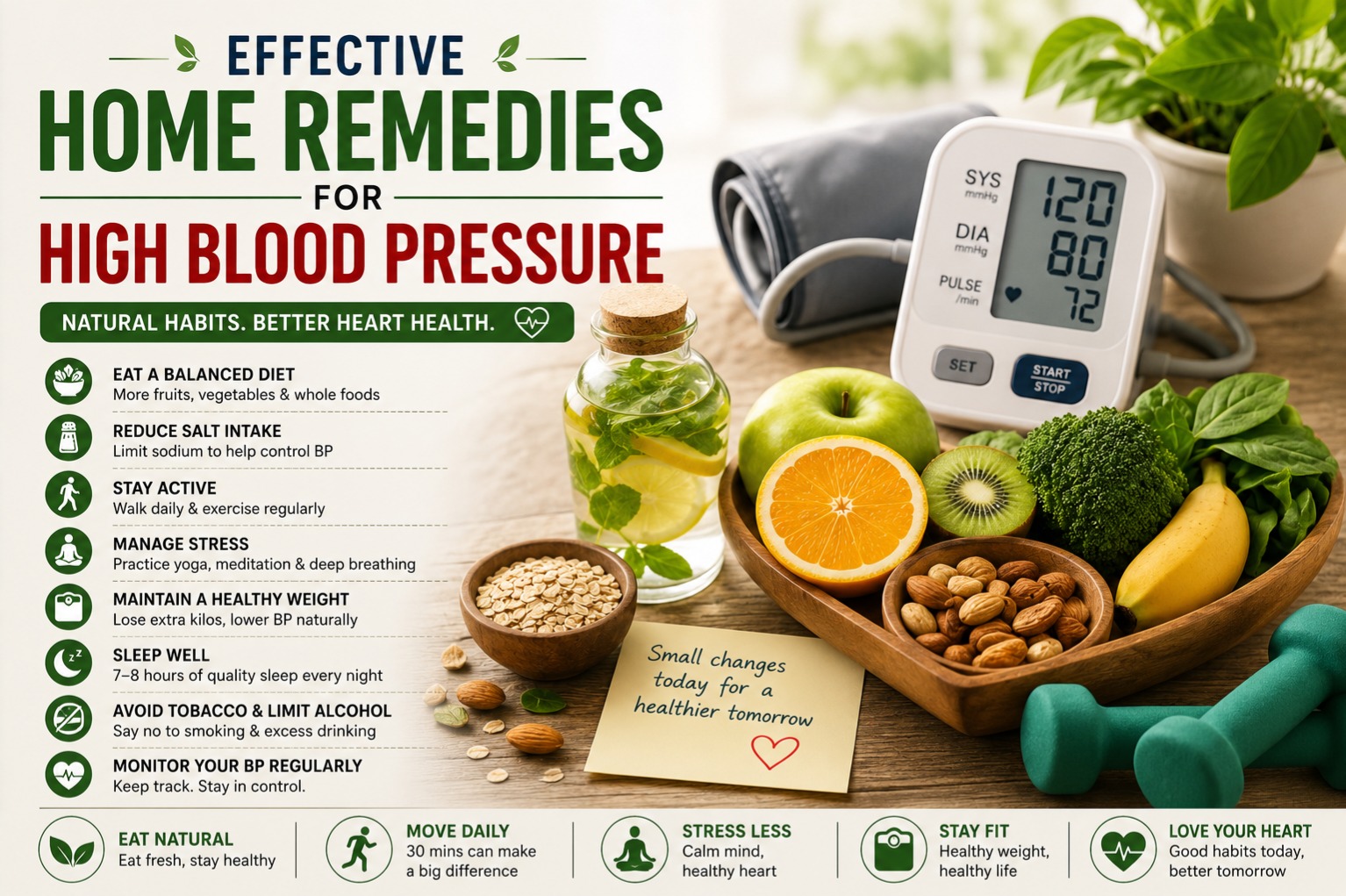
High blood pressure can develop without obvious symptoms, which is why it is often called a “silent” condition. Regular monitoring is important, but everyday lifestyle choices can also play a major role in keeping blood pressure under control.
Home remedies should support—not replace—medical treatment prescribed by your doctor.
1. Reduce Salt Intake
Too much sodium can increase blood pressure. Try to reduce foods such as:
Pickles and papad
Namkeen and packaged snacks
Instant noodles
Processed foods
Restaurant and fast foods
Use lemon, garlic, ginger and herbs to add flavour without relying heavily on salt.
2. Eat More Fruits and Vegetables
Include plenty of fresh vegetables, fruits, whole grains, pulses and legumes in your daily meals.
Foods such as spinach, tomatoes, bananas, oranges, guava, beans and other vegetables can form part of a heart-friendly diet.
If you have kidney disease or have been advised to restrict potassium, speak with your doctor before increasing high-potassium foods.
3. Stay Physically Active
Regular exercise can help lower blood pressure and improve heart health.
Aim for around 150 minutes of moderate physical activity per week, such as brisk walking, cycling or swimming.
If you are not currently active, start with 10–15 minutes a day and gradually increase the duration.
4. Maintain a Healthy Weight
Being overweight can increase the risk of high blood pressure. Even modest weight loss can provide health benefits.
Focus on sustainable habits rather than crash diets:
Control portion sizes
Eat more vegetables
Include adequate protein
Reduce sugary drinks
Stay physically active
5. Manage Stress
Long-term stress can affect sleep, eating habits and other behaviours that influence blood pressure.
Simple activities such as walking, yoga, meditation, deep breathing or spending time with family and friends can help you manage everyday stress.
6. Get Enough Sleep
Poor sleep can affect blood pressure and overall cardiovascular health.
Try to maintain a regular sleep schedule and aim for around 7–9 hours of sleep for most adults.
If you regularly snore loudly, wake up gasping or remain extremely tired during the day, talk to a healthcare professional.
7. Avoid Smoking and Limit Alcohol
Smoking damages blood vessels and increases cardiovascular risk. Quitting is one of the most important things you can do for your heart.
Excessive alcohol consumption can also raise blood pressure, so limiting or avoiding alcohol is recommended.
8. Monitor Your Blood Pressure
Checking your blood pressure at home can help you understand your usual readings and identify changes.
For more reliable readings:
Sit quietly for a few minutes first
Keep your feet flat on the floor
Support your arm comfortably
Avoid talking during the measurement
Record your readings regularly
Look at the overall pattern rather than worrying about one unusual reading.
Can Home Remedies Replace Blood Pressure Medicine?
No.
Healthy eating, exercise, weight management and stress control can improve blood pressure, but many people still require medication.
If your doctor has prescribed blood pressure medicine, do not stop or change the dose on your own, even if your readings improve.
Also be cautious about herbal products or supplements advertised as “natural blood pressure cures.” Natural products can still cause side effects or interact with medicines.
When Should You Seek Medical Help?
If your blood pressure is consistently higher than recommended, speak with a healthcare professional.
A reading of 180/120 mmHg or higher, especially when accompanied by symptoms such as chest pain, difficulty breathing, severe headache, confusion, weakness or vision changes, requires urgent medical attention.
The Bottom Line
The most effective home approach to managing high blood pressure is not a single food, drink or herbal remedy. It is a combination of healthy daily habits:
Eat less salt
Choose more fruits and vegetables
Exercise regularly
Maintain a healthy weight
Sleep well
Manage stress
Avoid smoking
Limit alcohol
Monitor your blood pressure
Take prescribed medication as directed
Small changes made consistently can make a meaningful difference to your heart health.
Medical disclaimer: This article is for general health education and does not replace individual medical advice, diagnosis or treatment. Consult a qualified healthcare professional for persistent or high blood pressure readings.